Essentials Design System
Context
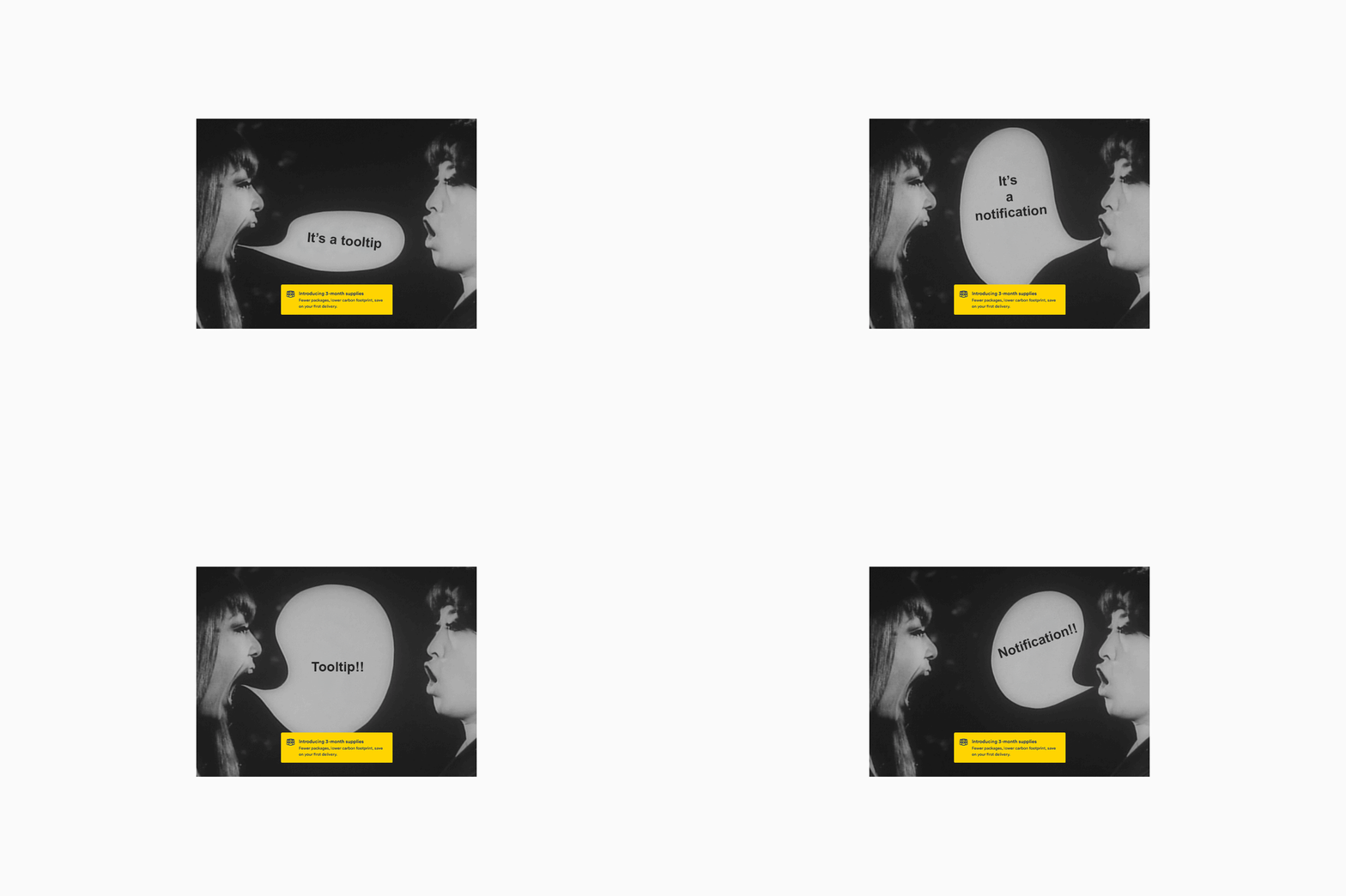
After 7 years of building and scaling Ritual's digital ecosystem, the company still did not have a formal design system. Teams were solving the same interface problems in different ways, which created inconsistent UI patterns, slower design output, accessibility drift, and inefficient handoffs between design and engineering.
Goal
Essentials(named after the company's first product) was created to give product, design, and engineering a shared language for building Ritual experiences. The goal was not just to make the UI more consistent, but to reduce repeated decisions, improve accessibility, speed up delivery, and create a foundation that could scale across Ritual's digital ecosystem.

Approach
We started by understanding the existing design debt before defining the system itself.
- Step 1 - Audit: Created an inventory of inconsistencies, shared patterns, and component variants across storefront, subscription, account, and email experiences.
- Step 2 - Diagnose: Mapped where patterns were fragmenting, where teams were duplicating work, and which inconsistencies had the highest impact on quality and speed.
- Step 3 - Synthesize: Defined reusable foundations, components, and patterns that could support product, marketing, and lifecycle use cases without forcing every team to start from scratch.
What We Built
The system came together as a practical foundation for day-to-day product work: spacing, typography, color, iconography, interaction states, components, and page-level patterns. Each piece was designed to create more consistency while still giving teams enough flexibility to support different customer journeys.
System In Practice
Essentials became most valuable when it moved beyond documentation and started shaping real customer experiences. The system helped unify navigation, product collections, product detail pages, content modules, account tools, and conversion flows while keeping Ritual's brand expression intact.
From Components To Patterns
Even simple components became more useful when paired with clear usage rules. Common patterns were documented with states, spacing, and implementation guidance so design and engineering could make decisions from the same source of truth.

Impact
The introduction of Essentials changed how design, engineering, and product operated at Ritual. It reduced inefficiencies, accelerated execution, improved accessibility, and gave teams a clearer way to build from shared decisions.
Handoff Production Time
Avg. ~12hr decrease
Ongoing Governance
Essentials became an ongoing body of work, not a one-time launch. Keeping the system useful meant continuing to evolve it alongside product needs while protecting the consistency and quality it introduced.
- Evolving: Expanded and refined components, patterns, spacing, typography, and color as new product needs emerged.
- Maintaining: Kept design and code aligned through bug fixes, versioning, deprecated patterns, and ongoing documentation updates.
- Enabling: Supported adoption through onboarding, office hours, and hands-on collaboration with product teams.
- Auditing: Continued reviewing how the system was used across Ritual's platform to uncover gaps, drift, and new opportunities for alignment.